

Deck-Mounted Glass Spigots: Specifying a 42-Inch Frameless Railing in 10 mm or 12 mm Glass
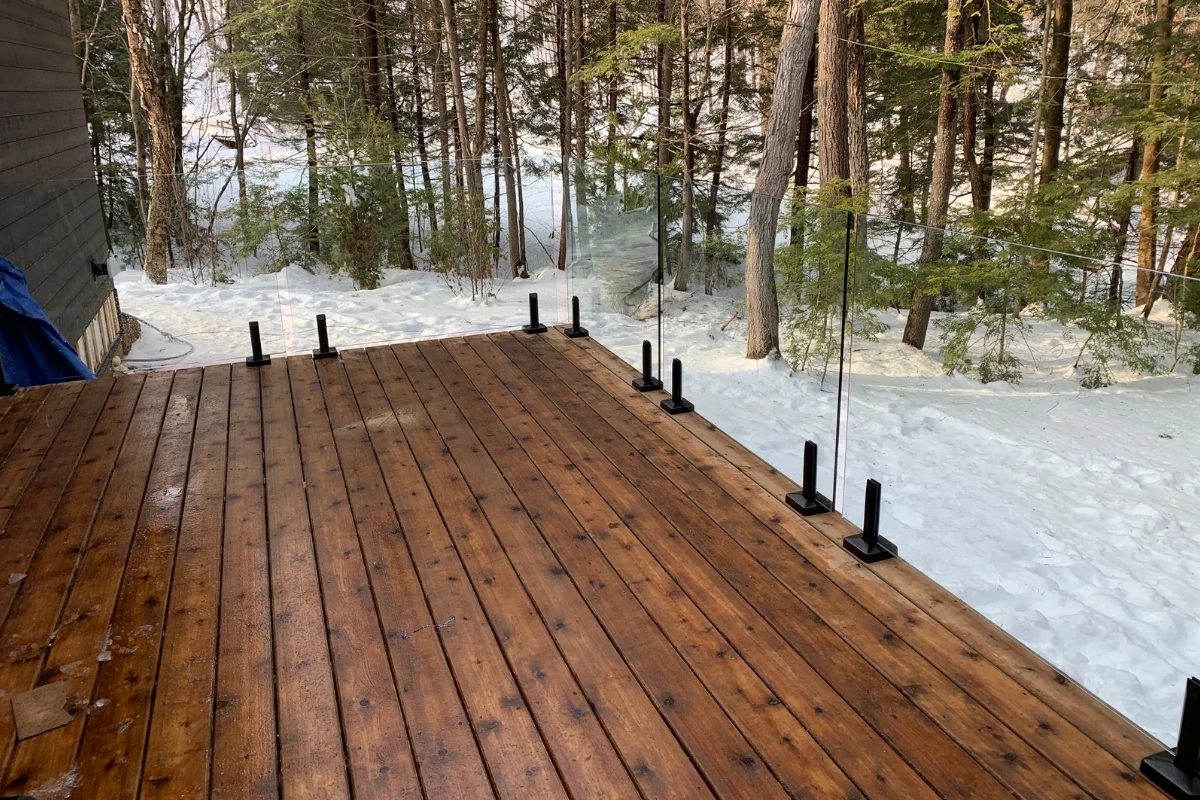
A deck-mounted glass spigot is not a catalogue pick — it is the output of four numbers. Fix the rail height (typically a 42″ finished rail), the glass thickness (10 mm or 12 mm), the panel span (up to 6 ft on a frameless system) and the mounting line (deck surface or fascia), and the spigot almost specifies itself. Skip any one of them and the mistake surfaces on site, after the glass has already been tempered.
1. The four numbers that decide the spigot
|
Input |
Typical value |
What it changes |
|
Rail height |
42″ finished rail height (sometimes 36″) |
Spigot height and glass panel height — the panel is sized so the finished rail lands on the code height |
|
Glass thickness |
10 mm or 12 mm clear tempered |
Clamp channel and gasket width; 12 mm is the stiffer choice for longer spans |
|
Panel span |
Up to 6 ft on a frameless system |
Number of spigots per panel and the load path into the deck |
|
Mounting line |
Deck (surface) mount or fascia (side) mount |
Base plate and bolt pattern; side mount clears the walking surface but needs a structural stringer |
2. Deck-mounted or fascia-mounted: decide the line before tooling
Deck-mounted (surface-mounted) spigots sit flat on the deck or tread and carry the glass from below, so no tall posts interrupt the view. It is the default for residential decks, and for any substrate with room for a base plate.
Fascia or side mounting bolts the hardware to the outside of the rim joist or stringer and keeps the full walking surface clear — the right answer on narrow stairs, and where a deck edge cannot take a base plate. If a project may need both, say so at the drawing stage. The base plate, bolt pattern and geometry change between the two, and retrofitting after tooling is the most expensive way to find out.
3. The five-line specification a foundry actually needs
|
Specification line |
Why it decides the price |
Who supplies it |
|
Rail height + glass thickness |
Sets spigot height, clamp channel and gasket profile |
You, from the drawing |
|
Panel size and span |
Sets the spigot count and the governing load case |
You |
|
Mounting type and substrate |
Sets base plate, anchor type and bolt pattern |
You, from the site condition |
|
Finish |
Sets the process route and lead time |
You: brushed, mirror, matte textured black or powder coat |
|
Glass edge condition, gaskets, drainage |
Sets gasket profile and the crevice strategy |
Shared |
|
Documentation required |
Sets inspection and certification steps |
Shared: material certificate, spectrometer check, load test report |
Get these lines right and a quotation is accurate the first time. Leave them to “standard” and you will get a price built on assumptions.
4. “Tempered and heat soaked” is a specification, not a slogan
Toughened glass can break without warning when a nickel sulphide (NiS) inclusion inside the pane expands. Heat soak testing puts the finished pane through an oven cycle at elevated temperature, so that any inclusion destined to fail does so in the plant rather than in the installed railing.
It reduces the risk rather than eliminating it — published work on residual NiS risk after heat soaking makes that clear — which is precisely why it belongs on the specification line instead of in the marketing copy. On a clamped, undrilled panel the glass is the most expensive single item and the hardest thing to replace, so ask your glass supplier for the heat soak evidence, not just the phrase.
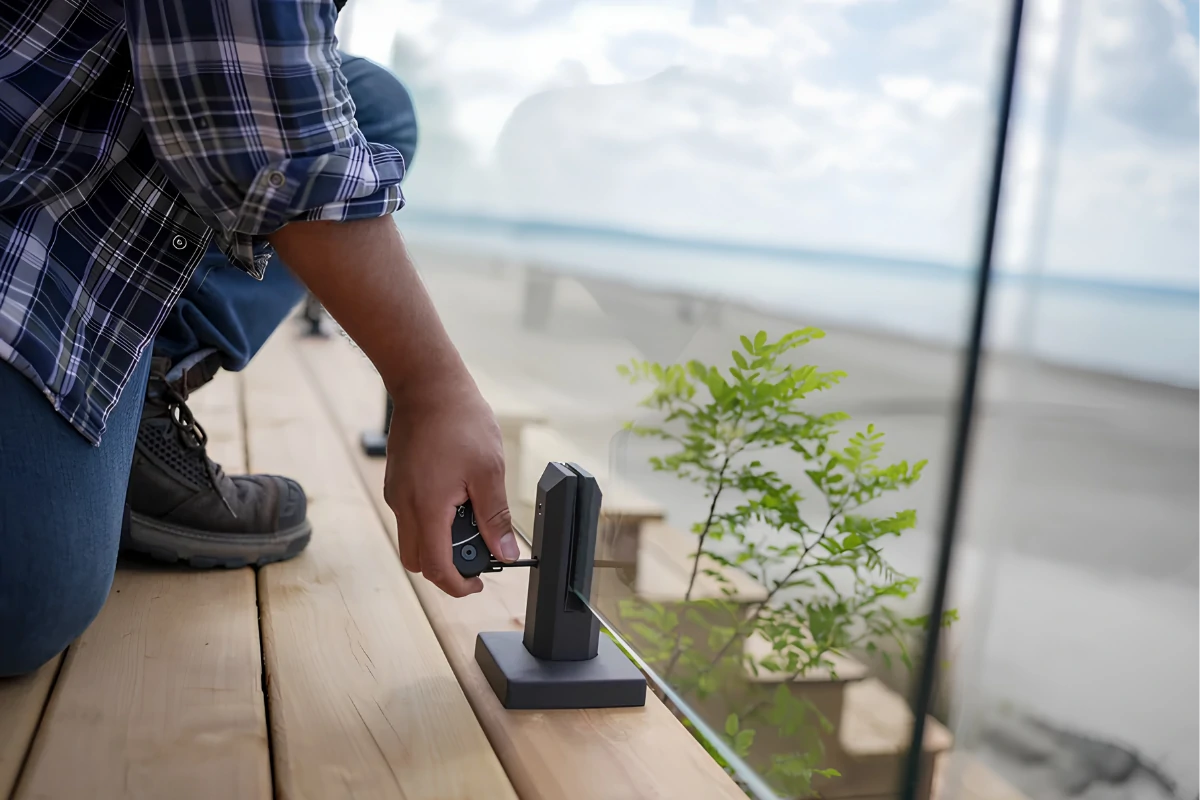
5. Top rail, top clips and LED lighting are spigot-stage decisions
If the design may later gain a top rail, top clips or LED lighting, decide now rather than after the order. A top rail changes the load path and often the spigot height; top clips change the glass edge condition; and LED lighting interacts with the glass type and with anything fixed to the top edge — on a light-transmitting spigot, a handrail or top rail blocks the light path and destroys the even glow along the panel. Ask for these as one set.
6. Gaskets, drainage and the crevice rule
Between the glass and the clamp there is always a crevice, and a crevice that stays wet is where stainless steel fails first. Specify the gasket material and the drainage direction, and keep the base plate able to shed water. Grade selection belongs in this conversation too: 304, 316 and 2205 duplex behave very differently in splash and salt-spray conditions, and the difference shows up at exactly these joints.
- How many spigots per panel? Nobody should answer from a catalogue
Spigot count is a calculated output of rail height, glass thickness, panel span, wind and crowd loads and the local code — not a fixed catalogue value. As one published example from our own range, our solar LED glass spigot is specified at two spigots per 42″ × 42″ panel; that figure belongs to that product, not to every system. When you request a quote, ask for the spacing basis to come with it, and let the calculation be visible.
FAQ
Q1: 10 mm or 12 mm glass?
A: 12 mm gives a stiffer panel and is normally the choice for longer spans and higher exposure; 10 mm suits shorter spans and lighter duty. The clamp channel and gasket must match the thickness you choose — it is not a change you make after the spigots are cast.
Q2: Can we add LED lighting or a top rail later?
A: Physically yes, but expect consequences: a top rail changes the load path, and anything fixed to the top edge blocks light on a light-transmitting spigot. Decide before the order.
Q3: What finish holds up outdoors?
A: Both brushed stainless and matte textured black hold up when the base metal and the coating are specified correctly. The bigger variable outdoors is the alloy grade and the coastal exposure, not the colour.
Q4: Do we need heat soaked glass?
A: It is the cheapest insurance against spontaneous breakage in a clamped, hard-to-replace panel. Ask for the test evidence rather than the phrase.
Send us the four numbers
Send the four inputs above — rail height, glass thickness, panel span and mounting line — with a sketch or site photo, and our engineering team will reply with the spigot configuration, the spacing basis and the documents that ship with the order. We cast, machine, polish and coat in-house, and every shipment is verified by spectrometer and shipped with a material certificate.