

Curved Aluminum Base Shoe Railing: Engineering Specifications, Radius Tolerances, and Glass Selection for Circular Balconies & Staircases
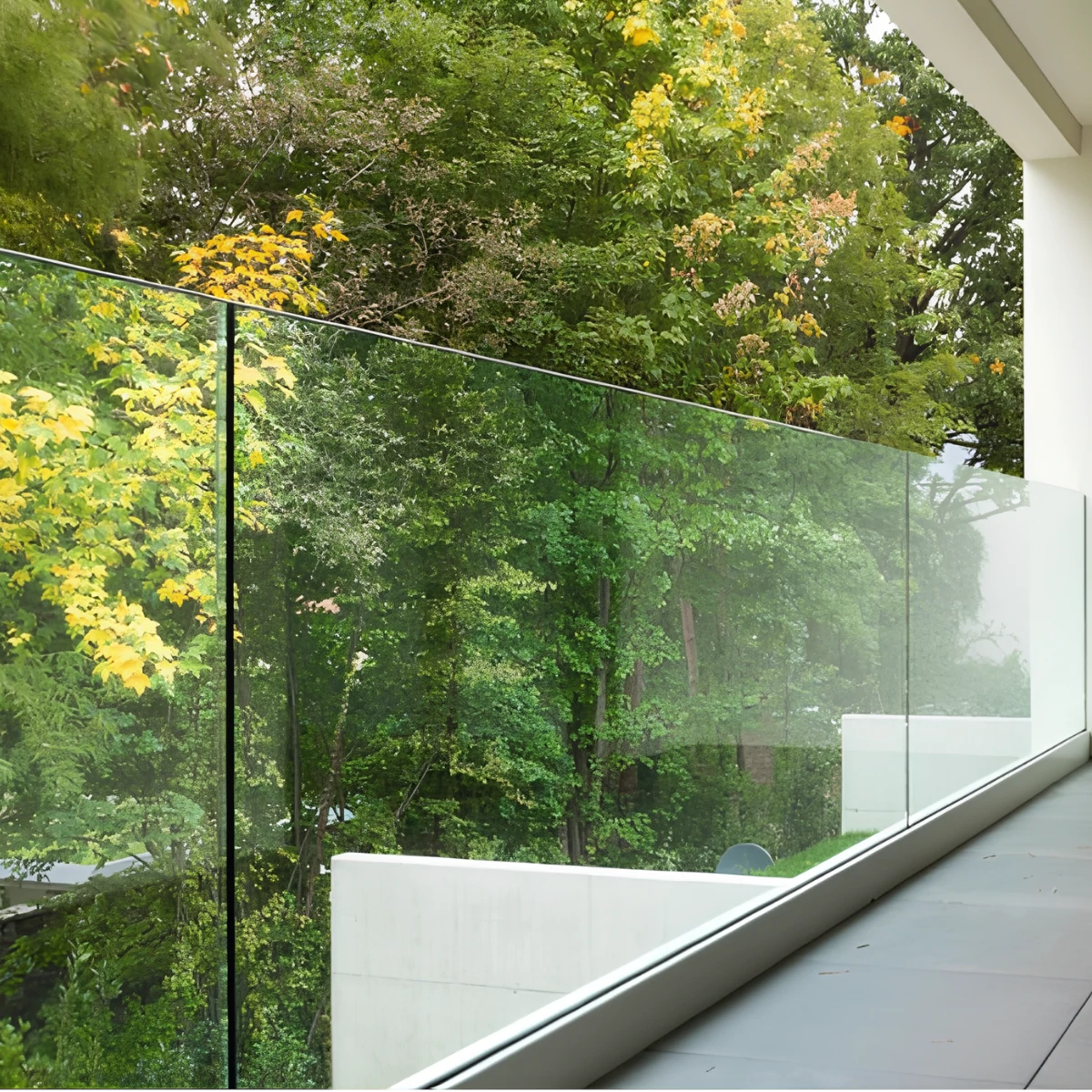
Introduction: The Structural Artistry of Curved Frameless Glass
Curved architectural features—such as sweeping spiral staircases, rounded mezzanine overlooks, and circular penthouse balconies—represent the pinnacle of luxury architectural design. While straight-run frameless glass railings rely on standardized modular components, curved glass balustrades introduce rigorous structural, geometric, and manufacturing constraints.
For glazing contractors and project engineers, the curved aluminum base shoe (often termed U-channel or base shoe profile) serves as the primary structural foundation. A minor discrepancy in the bending radius between the extruded aluminum shoe and the curved glass panel can result in uneven wedge pressure, unsightly installation gaps, or compromised structural stability under wind loads. Achieving a seamless, code-compliant result requires precise engineering alignment from the extrusion bend to the finished glass edge.
Aluminum Alloy Extrusions & CNC Bending Mechanics
Curved base shoe channels are predominantly manufactured from architectural-grade structural aluminum alloys, specifically 6063-T6 or heavy-duty 6061-T6. Unlike lightweight decorative trim, an architectural base shoe is an engineered structural member designed to resist demanding top-rail line loads and barrier impact requirements in full accordance with regional building codes (such as North American IBC standards and European/British BS & EN guardrail regulations).
Key manufacturing requirements for bending architectural base shoes include:
Stretch-Form Bending vs. Roll Bending: True CNC stretch bending is widely specified for architectural channels because it maintains uniform cross-sectional width. Roll bending without internal mandrels frequently causes the channel walls to collapse inward, compromising dry-glaze wedge clearance.
Standard Concentricity Tolerance: Commercial bending tolerances are tightly controlled across the total chord length to ensure proper dry-glaze gasket engagement and uniform load distribution.
Architectural Surface Finishes: Extrusions can be specified in Mill Finish, Class I Clear Anodized, Brushed Satin Stainless look, or Architectural Powder Coating (matte black, bronze, and custom RAL palettes) to resist corrosive outdoor weather.
Inside Radius (IR) vs. Outside Radius (OR) vs. Centerline (CLR)
The single most frequent cause of on-site rework on curved balustrade projects is inconsistent radius terminology between structural framing drawings and glass fabrication schedules.
Geometric Identity:
Outside Radius (OR) = Inside Radius (IR) + Total Assembly Thickness
For monolithic tempered glass, measuring from the concave face (IR) or convex face (OR) is relatively straightforward. However, for curved laminated glass, the inner and outer glass lites have distinct radii separated by the interlayer.
Rule of Thumb for Glaziers: Always dimension your project base shoe and glass schedules to the Center Line Radius (CLR) or Inside Radius (IR). Clearly specifying the reference datum eliminates ambiguity across CAD detailing, CNC extrusion bending, and tempering furnace setup.
Curved Glass Selection: Tempered Monolithic vs. SGP Laminated
In commercial and high-end residential balustrades, gravity-annealed bent glass is not suitable for safety barriers. Specifiers must choose between two primary safety glass technologies:
Curved Tempered Monolithic: Heated in a roller-hearth tempering furnace and rapidly quenched. It provides superior mechanical strength compared to annealed glass and fractures into small blunt dice. Primarily specified for low-level indoor barriers where top post-breakage retention is not mandatory.
Curved Laminated Glass with SGP (SentryGlas®) or PVB: Composed of two curved heat-strengthened or tempered lites bonded with an interlayer. Structural SGP ionoplast interlayers offer exceptional post-break rigidity and high tear resistance compared to standard PVB. If both glass lites fracture under catastrophic impact, the SGP interlayer keeps the curved panel fully upright and functional as a safety barrier.
Glazier’s RFQ Checklist: 5 Crucial Factors for Quotation
To avoid costly engineering revisions and obtain an accurate factory quote within 24 hours, specify the following parameters:
Radius Reference Datum: Specify whether the radius is Inside Radius (IR), Outside Radius (OR), or Center Line Radius (CLR) for exact channel fit.
Plan Geometry: Provide Arc Length (along the perimeter), Chord Length (straight point-to-point), and Rise/Camber height.
Glass Build-Up: State total panel thickness and laminate composition (e.g., Monolithic Tempered, SGP Laminated, or PVB Laminated).
Edge & Hole Fabrication: Flat polished exposed edges with safety arris. All cutouts and mounting holes must be CNC milled prior to the thermal bending and tempering cycle.
Base Shoe & Gasket Compatibility: Mounting configuration (Top/Surface Mount vs. Fascia/Side Mount) and dry-glaze wedge clearance allowances.
The Advantage of Turnkey Metal & Glass Sourcing
Historically, contractors were forced to source curved aluminum profiles from local benders and order curved glass from specialized glass processors. When tolerances clashed on site, suppliers blamed each other, leaving the glazier with expensive site downtime.
With fully integrated metal fabrication, CNC machining, and architectural glass manufacturing capabilities, ZDCAST provides turnkey curved railing systems where the aluminum base shoe, internal dry-glaze isolators, cladding covers, and curved glass panels are pre-tested and match-machined in the factory prior to export. This ensures seamless fitment, certified structural compliance, and fast on-site installation.